Brazil
"Into the Unknown": A ‘World first’ Mammal-focused Expedition Cruise to the Rio Aripuanã
Small vessel charter led by Chris Collins and Moacir Fortes Pereira Junior
WildWings is proud to offer a genuinely pioneering expedition: the world’s first mammal focused wildlife cruise along the Rio Aripuanã, travelling on the vessel Iracema. This remote confluence with the Rio Roosevelt is one of the least explored and most biologically remarkable parts of the Amazon basin, where the rivers have acted as natural barriers driving the evolution of numerous endemic species which are found nowhere else.
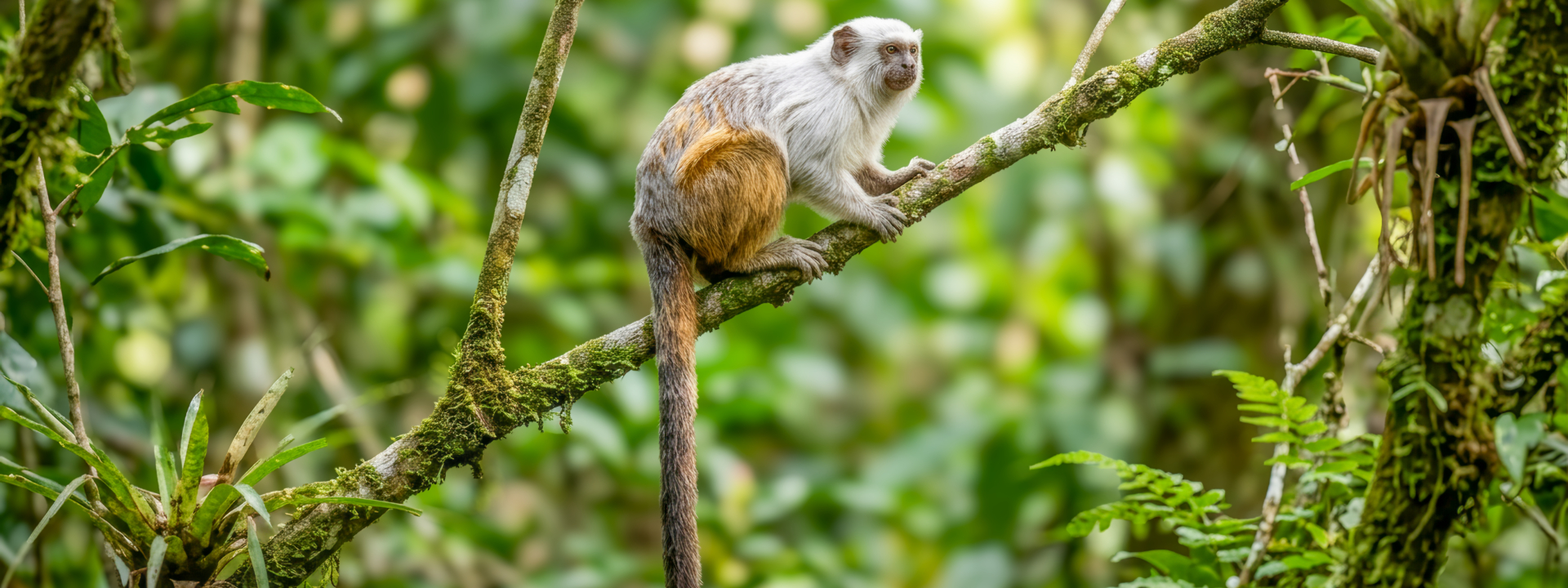
Potential primate highlights include Milton’s Titi which was only described in 2014 and the little known Marca’s Marmoset and Aripuanã Marmoset. Other exciting possibilities include Prince Bernhard’s Titi, Black crowned Dwarf Marmoset, Eastern Pygmy Marmoset and Black headed Night Monkey. A good number of other monkeys species have ranges which overlap this remote area making this a truly exceptional destination for primate enthusiasts.
Birds are also a focus, with recently described species such as Aripuanã Antwren and the poorly known Manicore Warbling-Antbird among the targets.
Nocturnal canoe excursions will offer chances to look for a very different range of wildlife with one of the species we hope to see being the rarely recorded and comparatively recently described Roosmalen’s Porcupine.
Iracema is a comfortable, air conditioned vessel well suited to narrow channels so perfect for this tour. She will host just twelve participants, making this a strictly limited, once in a lifetime opportunity to explore truly frontier breaking Amazonian wilderness.
Tour Dates & Prices
Fri 13th April 2029
Tue 1st May 2029
- Guaranteed Departure
2 Spaces Available
Tour Cost: 19 Days from £7595 excluding flights
What's Included?
- Two WildWings Tour Leaders
- Sixteen nights’ accommodation in Brazil, including fifteen on the comfortable air-conditioned river boat Iracema
- All main meals with drinking water provided during the day
- Visit to the Musa Canopy Tower on the outskirts of Manaus
- All entry fees
- Airport transfers in Manaus for those booked on the ‘official/recommended’ flights
- Checklist of birds and mammals
Cost Excludes
International and internal flights, insurance, drinks, airport meals/snacks and other items of a personal nature.
Tour Highlights
- Fifteen nights cruise on a comfortable river boat exploring Brazilian Amazonia
- Visit to the 'meeting of the waters' where the Rios Negro and Solimões merge to form the Amazon River before continuing on to the Madeira River where we hope to find Lake Baptista Titi and Golden-white Tassel-ear Marmoset
- Explore along the pristine Rio Aripuanã looking for a host of highly localised primates with our targets including Milton’s Titi, Aripuanã Marmoset and Marca’s Marmoset
- Other possibilities include Prince Bernhard’s Titi, Black-crowned Dwarf Marmoset, Eastern Pygmy Marmoset and Black-headed Night Monkey
- Explore after dark looking for nocturnal mammals and birds with the possibility of finding the extremely poorly known and only recently described Roosmalen’s Porcupine
- Look for a spectacular range of birds including localised endemics such as Aripuanã Antwren as well as more widespread species such as macaws, parrots, trogons and manakins
- Visit an amazing canopy tower on the outskirts of Manaus where we will see canopy species at eye level
- Expertly led by WildWings' Chris Collins and English-speaking Brazilian wildlife guide, Moacir Fortes Pereira Junior
Outline Itinerary
-
Fly to Manaus
-
Manaus, Canopy Tower and board Iracema. Sail east along the Amazon River
-
Madeira River
-
Rio Aripuanã
-
Leave Rio Aripuanã and onto the Madeira River
-
Madeira River
-
Amazon River
-
Disembark Iracema in Manaus and fly to the UK
-
Arrive UK
There are still places in Amazonia that very few wildlife enthusiasts have ever visited and the confluence of the Rios Aripuanã and Roosevelt is one of the most remote and biologically extraordinary corners of the entire Amazon basin.
WildWings is proud to announce a tour that is, quite simply, unique: the world’s first dedicated mammal-focused wildlife cruise to explore the Rio Aripuanã, aboard our trusted vessel Iracema.
This is not a reconfigured itinerary or a minor detour from our regular Amazon cruises but a genuine journey to the pristine forests of a region that is so rarely visited that several of its primate species were unknown to science until little more than a decade ago.
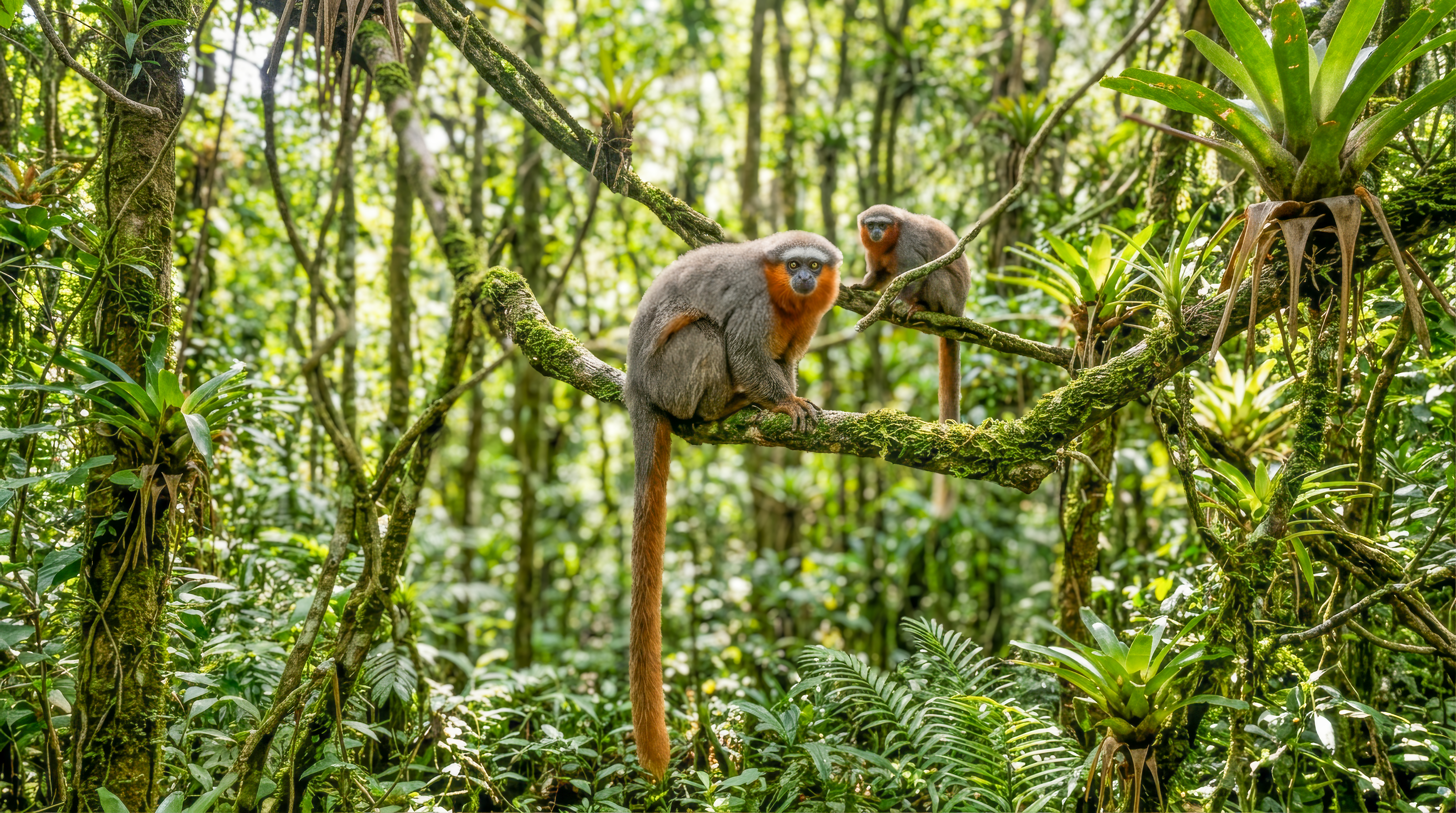
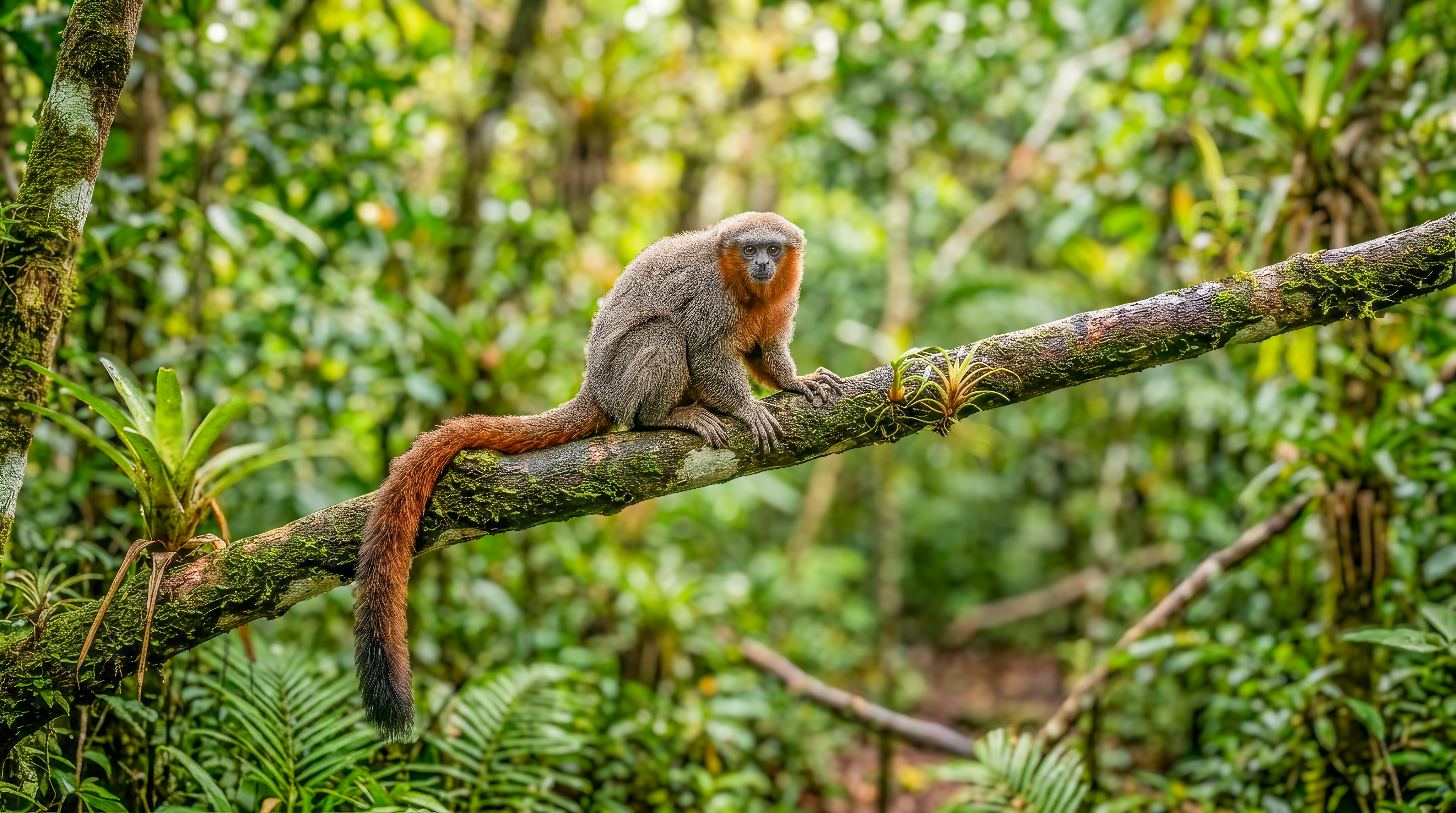
The rivers themselves are the story. Acting as powerful biogeographical barriers, the Aripuanã and Roosevelt have driven the evolution of an astonishing suite of endemic species which are found nowhere else on Earth. Among them is Milton’s Titi, a species whose entire range is centred on the interfluvial area between these two rivers and which was only described in 2014.
Another poorly known species which is known from this region is Marca’s Marmoset which was first collected at the mouth of the Rio Roosevelt and only described in 1993. Indeed, when the primate volume of the Handbook of the Mammals of the World was published twenty years later, almost nothing more was known about this highly localised species.
Aripuanã Marmoset is another rarely-recorded interfluvial endemic and there are a host of other localised species whose ranges overlap the forests along the Rio Aripuanã including Prince Bernhard’s Titi, Black-crowned Dwarf Marmoset, Eastern Pygmy Marmoset and Black-headed Night Monkey.
With Spix’s Saddle-back Tamarin, Red-bellied Tamarin, Red-nosed Bearded Saki, Mittermeier’s Saki, Gray’s Bald-faced Saki, Brown Capuchin, Spix’s White-fronted Capuchin, Golden-backed Squirrel Monkey, Ashy Titi, Black Spider Monkey, Common Woolly Monkey and Purus Red Howler also having ranges that traverse this river, the list of possibilities is truly mouthwatering.
Our understanding is that no mammal-focused wildlife tours have ever travelled along the Rio Aripuanã with the objective being to find these localised primates making this truly another WildWings “world first” holiday and it is genuinely possible that this voyage may either be a one-off or not repeated for several years.
Whilst the mammals will be our main focus, we will also spend time looking for some very special birds as the avifauna of this region is no less interesting. Aripuanã Antwren, for example, was only described in 2013 and is one of the species we hope to find.
Another poorly-known antbird which will be in range is Manicore Warbling-Antbird which has the smallest geographic distribution of any species of warbling-antbird and is the least known member of this genus.
As on our regular itineraries (“Remote Amazon” and “Primates and Parrots”), we plan to offer a number of nocturnal canoe rides and these can be genuinely exciting and provide a completely different perspective on the forest. Whilst the bewildering variety of rodents are the most commonly encountered species after dark, our other tours have found porcupines, silky anteater and Jaguar and one of the nocturnal species we hope to encounter is Roosmalen’s Porcupine. The smallest of the New World porcupines, this poorly known species was only described in 2001 and almost nothing is known about it.
For this exciting voyage, we plan to travel on Iracema which needs little introduction to WildWings regulars. Comfortable, air-conditioned, and perfectly suited to exploring the shallow tributaries and narrow channels that characterise this region, she is the ideal vessel for an expedition such as this with a top deck which previous guests have described as akin to a floating canopy tower.
Places on this expedition are strictly limited (as we will take just twelve participants) and if you have ever wanted to join a genuinely frontier breaking tour and look for wildlife which few others have seen then this is your chance.
Days 1 – 2
FLY TO MANAUS
Our tour begins with an overnight flight from the UK to Sao Paulo, where we will connect onto a further internal flight that carries us deep into the heart of the Amazon, to the city of Manaus. We are scheduled to touch down on the afternoon of Day 2, after which we will make the short transfer to our comfortable hotel for the night.
If flight schedules allow, we hope to fit in a short and entirely optional excursion to a remnant patch of forest not far from our hotel, where we can begin looking for our first birds, primates and other wildlife of the trip. This particular site is one of the best places we know of for encountering the highly localised and critically endangered Pied Tamarin, and finding this special monkey will be our main priority during the afternoon. Golden-faced Saki is also present in this forest fragment, and with a little luck we may also come across a couple of species of sloth as well as Red-rumped Agoutis. Night in Manaus.
Day 3
MANAUS, CANOPY TOWER AND AMAZON RIVER
We will rise early to make sure we arrive at an excellent canopy tower on the outskirts of Manaus shortly after first light. From this vantage point we have, on previous visits, enjoyed sightings of a range of primates, and we will be hoping for species such as Guianan Red Howler, Guianan (Brown-backed) Bearded Saki, Brown Capuchin and Pied Tamarin.
This same tower is also a superb spot for birds, and among the possibilities are Black-spotted Barbet, Guianan Toucanet, several species of macaw, Flame-crested Tanager, Red-legged Honeycreeper and numerous other species.
We plan to set sail from Manaus by late morning, and shortly afterwards should have the chance to witness the famous “meeting of the waters”, the striking point at which the Rio Solimões and Rio Negro converge to form the Amazon River proper. As the afternoon draws on and dusk begins to fall, we can expect to see various parrot species passing overhead as they make their way to their nighttime roosts, potentially including White-eyed Parakeet, Festive Amazon and Chestnut-fronted Macaw. Night aboard Iracema.
Days 4–5
MADEIRA RIVER
Overnight, we should reach the mouth of the Madeira River, at which point we will turn south-west and begin the long journey of almost 200 miles along this substantial tributary of the Amazon.
Around breakfast time on Day 4, we hope to find ourselves near the community of Novo Olinda do Norte, where we intend to search for two highly range-restricted and very special primates, the Lake Baptista Titi and the Golden-White Tassel-ear Marmoset.
From here we will continue making our way upstream, and depending on the progress we are able to make, we plan to fit in at least one excursion each day, and hopefully more, as we press on towards the community of Novo Aripuanã. This settlement sits at the mouth of the Rio Aripuanã, and we anticipate arriving there in the late evening of Day 5. We will then spend a further fourteen nights aboard Iracema.
Days 6–13
RIO ARIPUANÃ
Having spoken with people who have previously navigated the Rio Aripuanã, and after carefully studying satellite imagery of the region, we believe it should be possible to bring Iracema to within just a few miles of the mouth of the Rio Roosevelt. That said, water levels on this river can vary considerably from year to year, so nothing can be guaranteed, but we remain confident that we will be able to cover a good proportion of the roughly 200 miles that separate us from the mouth of the Roosevelt.
Our plans will stay flexible throughout our time in this region, but our overall aim will be to run canoe excursions in both the early morning and afternoon on more or less a daily basis. These will be supplemented by nighttime exploration whenever conditions allow, along with additional daytime wildlife watching from Iracema’s excellent top deck.
During the hottest part of each day, we will typically be cruising along the river, which gives us a natural opportunity to rest and relax at the time when wildlife activity is generally at its lowest.
We expect to stop and talk with some of the extremely remote communities we encounter along the way, since local people often have valuable knowledge of the wildlife found in their area. This approach has worked well for us on previous visits to new areas during our “Primates and Parrots” cruise, helping us to locate, for instance, new sites for species such as Martin’s Bare-faced Tamarin, Santarem Marmoset and White-faced Saki.
While there may be occasional opportunities to explore on foot, we expect that the great majority of our excursions will take place in Iracema’s comfortable canoes, simply because of the scarcity of people, and consequently of trails, in the areas we will be exploring.
Once we reach the closest point we are able to get to the mouth of the Rio Roosevelt, we will turn around and begin exploring further areas as we make our way back downstream.
Day 14
LEAVE RIO ARIPUANÃ AND ONTO MADEIRA RIVER
Our aim will be to reach the mouth of the Rio Aripuanã on Day 14, where we are likely to pause for several hours at the remote town of Novo Aripuanã so that the crew can take on further supplies. From there, we will begin our journey back down the Rio Madeira.
Days 15–16
MADEIRA RIVER
We have set aside two full days for the journey back down the Madeira River, and our goal will be to fit in at least one excursion per day, and hopefully more, though this will largely depend on the pace at which we are travelling downstream.
Our attention is likely to be focused mainly on the western bank of this substantial Amazon tributary, since a number of species found here do not occur on the eastern side of the river.
Depending on how quickly we are moving, we may also take the opportunity to explore the river islands near the mouth of the Madeira, which provide habitat for a number of bird species found nowhere else.
Day 17
AMAZON RIVER
It will take us almost a full day to travel upstream along the Amazon, from the mouth of the Madeira back to the wharf at Manaus, giving us a relaxed final day on the water in which to continue looking for birds and other wildlife as we head west.
Day 18
DISEMBARK IRACEMA IN MANAUS, FLY TO UK
On our last night aboard, the crew will navigate Iracema back into Manaus, and after breakfast the following morning we will reluctantly disembark.
It is only a short drive from here to the airport, from where we will fly to Sao Paulo to connect with an overnight flight back to the UK, arriving on Day 19.
Day 19
ARRIVE IN THE UK
WHAT TO EXPECT
It is important to appreciate that this voyage is much closer to a true expedition than a conventional tour as neither the guides, ship’s crew nor the vessel have been to the Rio Aripuanã previously and we will be exploring an area that only a handful of people interested in wildlife have previously visited.
As a result, flexibility will be the key and the published itinerary should be seen as our aspirational goal rather than providing any guarantees as to where we will visit or what we can expect to see.
The voyage has been scheduled at the end of the wet season when river levels should be approaching their maximum and based on discussions with local people who have been to the river (and a careful review of satellite imagery), we believe it should be possible to navigate Iracema to within a few miles of where the Rio Roosevelt flows into the Aripuanã.
We may then use the canoes to spend some time exploring along the Rio Roosevelt but it will only be possible to determine this when we arrive. Indeed, should the water levels be lower than expected and it is not possible to navigate as far as anticipated along the Rio Aripuanã, we may choose to explore other areas, however, our goal is to spend a good proportion of the voyage on the Rio Aripuanã and to maximise on finding wildlife.
It should be noted that to reach the mouth of the Rio Aripuanã involves sailing approximately 100 miles downstream along the Amazon from Manaus and then a further 190 miles upstream along the Madeira. It is anticipated that this will take three days on the outbound journey and about the same on the return.
Our plan is to make some excursions (a mix of morning, afternoon and after dark) on both transits with one stop likely to be at a site we visit on “Primates and Parrots” where Golden-white Tassel-ear Marmoset and Lake Baptista Titi can be found.
We also hope to do some exploration along the west bank of the Rio Madeira, as there are a number of species there, both mammals and birds, which are of interest and not found along the Rio Aripuanã.
As well as using satellite imagery to select the places we plan to explore, we will also stop at some of the extremely remote communities along the Rio Aripuanã as local people are often familiar with the species we are keenest to find.
By then paying these individuals to access their land and (hopefully) show us some of the wildlife we are looking for, they then not only earn some additional income but also see a financial advantage in preserving habitats and the wildlife.
Most of our excursions will be made using our vessel’s motorised canoes, although we anticipate that there may be some opportunities for some, generally short walks in the forest. We may be in the canoes for 3-4 hours at a time but are usually able to find somewhere to land to stretch our legs or for a “comfort break”.
Boarding the motorised wooden canoes requires reasonable mobility but should not be a problem for average individuals. If in doubt, please contact us.
As with all wildlife tours to the tropics, be prepared for early starts, getting out in the field at daybreak, typically followed by a siesta during the hottest and least ‘birdy’ part of the day before venturing out again mid-late afternoon.
On most mornings, we are likely to have breakfast at approximately 05:30 and then set off at first light but there may be other occasions when we go out for a couple of hours and then come back for breakfast, although there will invariably be coffee and cake available beforehand.
There is no compulsion to join the excursions and you may, of course, elect to stay onboard the vessel at any time if you wish.
On some evenings, we will offer canoe rides after dinner to look for nocturnal mammals and bird. These trips may be for up to a couple of hours or so and occasionally longer.
WEATHER
As Manaus is just three degrees south of the Equator, the climate is tropical with daytime temperatures typically reaching a high of about 31C (88F) in Manaus in April, although we will generally be back on Iracema from late morning until the middle of the afternoon.
To enable us to reach locations which are inaccessible during the dry season (when river levels are lower), our tour is scheduled at the end of the wet season, however, despite this we will probably only encounter occasional and sometimes heavy downpours with much of the rain likely to be during the night.
ACCOMMODATION
Our vessel has cabins on two decks and an open but largely covered top deck which is great for wildlife watching. All decks are connected by staircases which have handrails.
Each cabin is for two people with a private bathroom and air-conditioning, although this is only turned on at night for sleeping and during the heat of the day if we are travelling between locations. The private bathrooms have a sink, toilet and cool-water shower (the water is not heated but it is lukewarm and refreshing). There are also reading lights by each bed.
The cabins have comfortable bunk beds with a ladder to access the top bunk. There is space in each cabin to store your possessions.
The main deck has eight of the cabins, the second deck has the other four passenger cabins, plus the bar/dining saloon/lounge and a small library.
A limited laundry service is available onboard although everything has to be line dried so there are no guarantees how long this will take.
For our night in Manaus, we stay in a good quality tourist hotel where all rooms have private facilities.
MEALS
All main meals (and drinking water provided during the day) are included in the tour price, commencing with dinner at our hotel in Manaus on Day 2 and concluding with breakfast on Day 18 prior to disembarking Iracema and our flight home.
Meals on Iracema are buffet-style and usually comprise a tasty range of meat, fish and vegetarian options for lunch and dinner. Due to the remoteness of our trip, we are unable to cater for very specific dietary requirements but vegetarians, for example, should have no major problems.
Mineral water is available from a series of coolers, and we would encourage you to bring a suitable water bottle to fill this up.
There is a modest bar aboard which sells a range of alcoholic and soft drinks. This is run on a ‘chit system’ and you can pay in cash (US dollars or Brazilian Reals) or by credit card at the end of the trip.
WALKING
Most of our excursions will be in Iracema‘s motorised canoes and we are unlikely to land on the majority of excursions. Where we do, walks are taken at a gentle pace.
Comfortable shoes or sandals should be fine when we are aboard Iracema but we would strongly recommend bringing some wellington boots for our walks as it can be muddy stepping from the canoe onto the shore and in the forest, with the possibility of occasionally having to stand in shallow water/mud to get in and out of the canoes.
GROUND TRANSPORT
We will travel by private air-conditioned minibus between Manaus airport and our hotel and then when we return to the airport at the end of the trip. When on our cruise, almost all excursions will be by canoe with occasional landings.
The canoes are open, with wooden bench seats, on which two participants will sit. Cushions and life jackets are available onboard. The seats have back support.
Ask About This Tour
If you have any questions about this tour, please enter your details here and we will get back to you as soon as possible.
Alternatively, contact us by email or phone. We look forward to hearing from you!
- 0117 965 8333
- [email protected]
Or complete the contact form and we will endeavour to get back to you as soon as possible.
* = required field