Spain
In search of the Iberian Lynx
An 8-day holiday looking for Iberian Lynx and an impressive range of other wildlife in Southern Spain
This 8-day wildlife holiday takes you deep into two of Spain’s most iconic natural areas, southern Extremadura where we will go in search of the world’s rarest cat, the Iberian Lynx, and the vast marshes of Doñana National Park, a true birdwatching and wildlife paradise.
As well as the lynx, the bird list makes this a highly attractive tour with the possibility of Great and Little Bustards, Pin-tailed and Black-bellied Sandgrouse, White-headed and Marbled Ducks, Spanish Imperial and Bonelli’s Eagles, plus Red-knobbed Coot, Calandra Lark and Iberian Magpie.
With time also allocated to explore more widely in Extremadura and the Doñana National Park, participants can expect to enjoy an impressive range of southern Europe’s special birds, as well as great chances of seeing one of the continent’s rarest mammals.
WildWings’ expert Spanish guide, Fernando Enrique Navarrete (who speaks fluent English), is arguably the perfect person to lead this trip as he lives in southern Spain, has vast experience of finding Iberian Lynx and the special birds of this fantastic region and has been leading tours for our sister brand, Limosa , for over a decade.
Tour Dates & Prices
Sun 17th January 2027
Sun 24th January 2027
- Available
Sun 16th January 2028
Sun 23rd January 2028
- Available
Tour Cost: 8 Days from £2795 including return flight from London
What's Included?
- Led by WildWings expert bird and wildlife guide Fernando Enrique Navarrete
- Seven nights’ accommodation in southern Spain staying at comfortable hotels and lodges
- All main meals from lunch on day 1 until lunch on day 8
- Surface transportation by minibus or other suitable vehicle depending on group size
- All excursions, entry fees, tour-based tips (local guide and driver) and taxes
- Checklist of mammals and birds
Cost Excludes
Insurance, drinks, airport meals/snacks and other items of a personal nature
Additional Information
The land only cost is the price you will pay if you choose to arrange your own international flights. If you select this option, please contact the WildWings office before making your travel arrangements.
Tour Cost: 8 Days from £2895 including return flight from London
What's Included?
- Led by WildWings’ expert bird and wildlife guide Fernando Enrique Navarrete
- Seven nights’ accommodation in southern Spain staying at comfortable hotels and lodges
- All main meals from lunch on day 1 until lunch on day 8
- Surface transportation by minibus or other suitable vehicle depending on group size
- All excursions, entry fees, tour-based tips (local guide and driver) and taxes
- Checklist of mammals and birds
Cost Excludes
Insurance, drinks, airport meals/snacks and other items of a personal nature
Additional Information
The land only cost is the price you will pay if you choose to arrange your own international flights. If you select this option, please contact the WildWings office before making your travel arrangements.
Tour Highlights
- An opportunity to look for one of Europe's rarest mammals, the Iberian Lynx, in two of its remaining strongholds
- Three full days to explore southern Extremadura looking for Iberian Lynx
- Expect to see an impressive range of special birds including Spanish Imperial Eagle and Iberian Magpie, as well Great and Little Bustards, Black-bellied and Pin-tailed Sandgrouse and both Calandra and Thekla Larks
- Two days in the UNESCO World Heritage Doñana National Park with further chances to see Iberian Lynx
- Visit wetlands for White-headed, Marbled and Ferruginous Ducks, Red-crested Pochard, Red-knobbed Coot, Western Swamphen and a rich variety of other waterbirds
Outline Itinerary
-
Fly to Malaga and drive to Llerena. Night Llerena
-
Explore southern Extremadura, with our primary focus being to find Iberian Lynx. Opportunities to also see an impressive range of birds including both Iberian endemics, Spanish Imperial Eagle and Iberian Magpie. Three further nights in Llerena
-
Transfer to the UNESCO World Heritage Doñana National Park. Night near Pilas
-
Two full days of bird and mammal watching in the Doñana National Park with further chances to look for Iberian Lynx and a new suite of birds. Two further nights near Pilas
-
Enjoy some final wildlife watching before the transfer to Malaga airport and flights back to the UK.
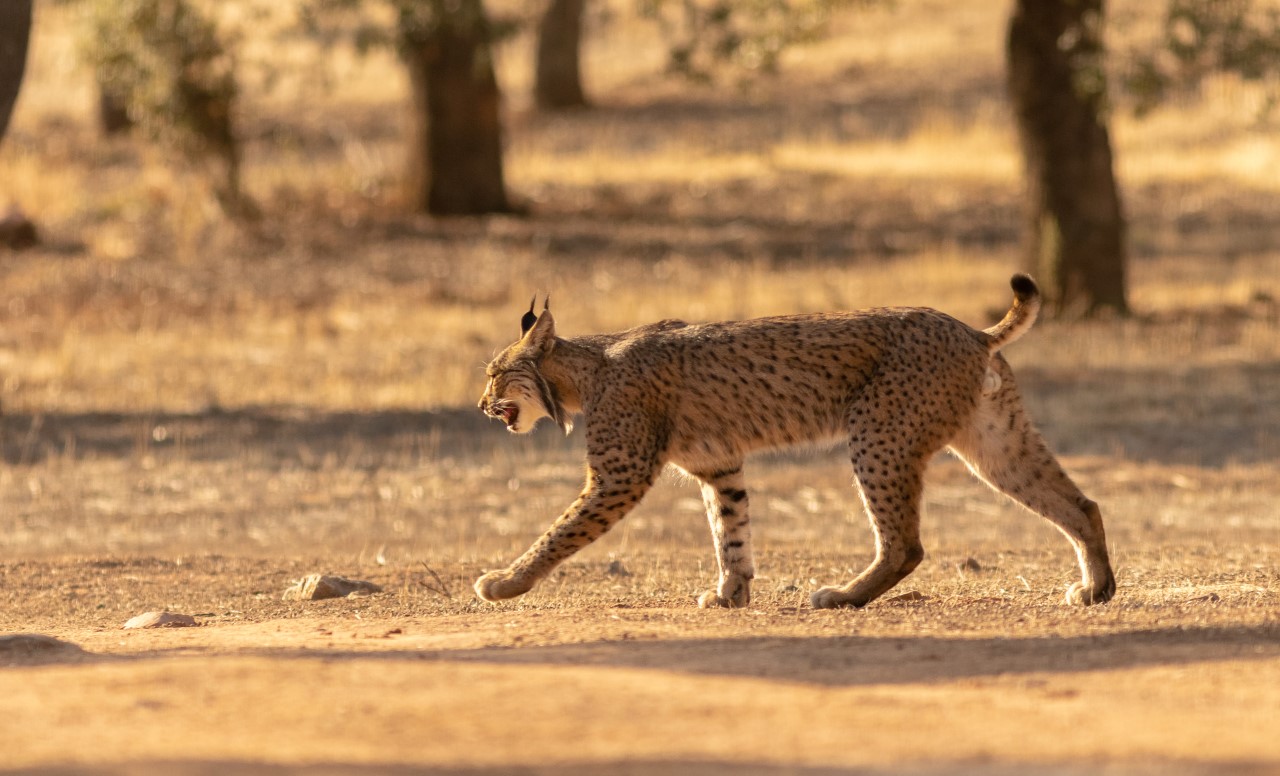
The south of Spain is undoubtedly one of the most interesting areas in Europe for wildlife and as well as being home to some very special birds such as Spanish Imperial Eagle, White-headed Duck and Iberian Magpie, it is also the last stronghold of one of Europe’s rarest mammals, the Iberian Lynx.
Whilst the numbers of this highly localised feline have increased in recent years (from an estimated low point of less than one hundred individuals just a few decades ago), it remains a tricky species to find without local knowledge and assistance.
After leaving Malaga airport, our tour begins with a visit to Laguna de Fuente de Piedra which is home to the second largest colony of Greater Flamingos in Europe. Although the birds will not be breeding at the time of our visit, nevertheless, there should still be plenty present along with an impressive selection of other waterbirds. Both Marbled and White-headed Ducks can be found here and we are also likely to find Eurasian Stone-curlew plus wintering flocks of Common Cranes.
After arriving at our comfortable hotel near Llerena, we will then have three days exploring southern Extrmadura. Here, our primary focus will be Iberian Lynx and we are likely to visit a number of watchpoints and other prime locations to maximise on our chance of an encounter with this elusive feline.
The area is also excellent for birds with good numbers of raptors and vultures. These will hopefully include Spanish Imperial, Golden and Bonelli’s Eagles, along with both Cinerous (previous Black) and Griffon Vultures with the latter often occurring in good numbers. Iconic steppe species including Great and Little Bustards are also likely, with the former often forming decent-sized flocks at this time of year. Both Pin-tailed and Black-bellied Sandgrouse are possible and we will hope to find all four of these species when taking a break from our quest for the lynx.
Other possibilities include Iberian Magpie (which is endemic to Spain and parts of Portugal), Blue Rock Thrush and we may even see Great Spotted Cuckoo as small numbers remain in Spain during the winter months.
After a final morning in the ‘Land of the Lynx’, we will reluctantly leave Llerena and head south to the world famous Doñana. As on our northbound journey, we will make some carefully selected stops where our main emphasis will be to find any of the special birds of the Spanish steppe which we have not yet seen.
We will then begin our exploration of the Doñana National Park which is rightly classified as a World Heritage Site by UNESCO. With two full days in the area, we are likely to visit a mixture of saltpans, marshes, rice fields and woodlands in search of the special wildlife of this region.
Despite a very different environment to Llerena, the Doñana National Park is also home to the Iberian Lynx with a population of around one hundred or so individuals and we will have further chance to look for this species.
The park is, however, world famous for birds and out on areas of open water we will hope to find White-headed, Marbled and Ferruginous Ducks and Red-knobbed Coot, with Western Swamphen and a selection of herons along the reedy edges.
A good selection of raptors are also to be expected and whilst we are likely to have already seen species such as Spanish Imperial Eagle, there are further opportunities to see this vulnerable species along with Black-winged Kite, Hen Harrier, Red Kite and Merlin.
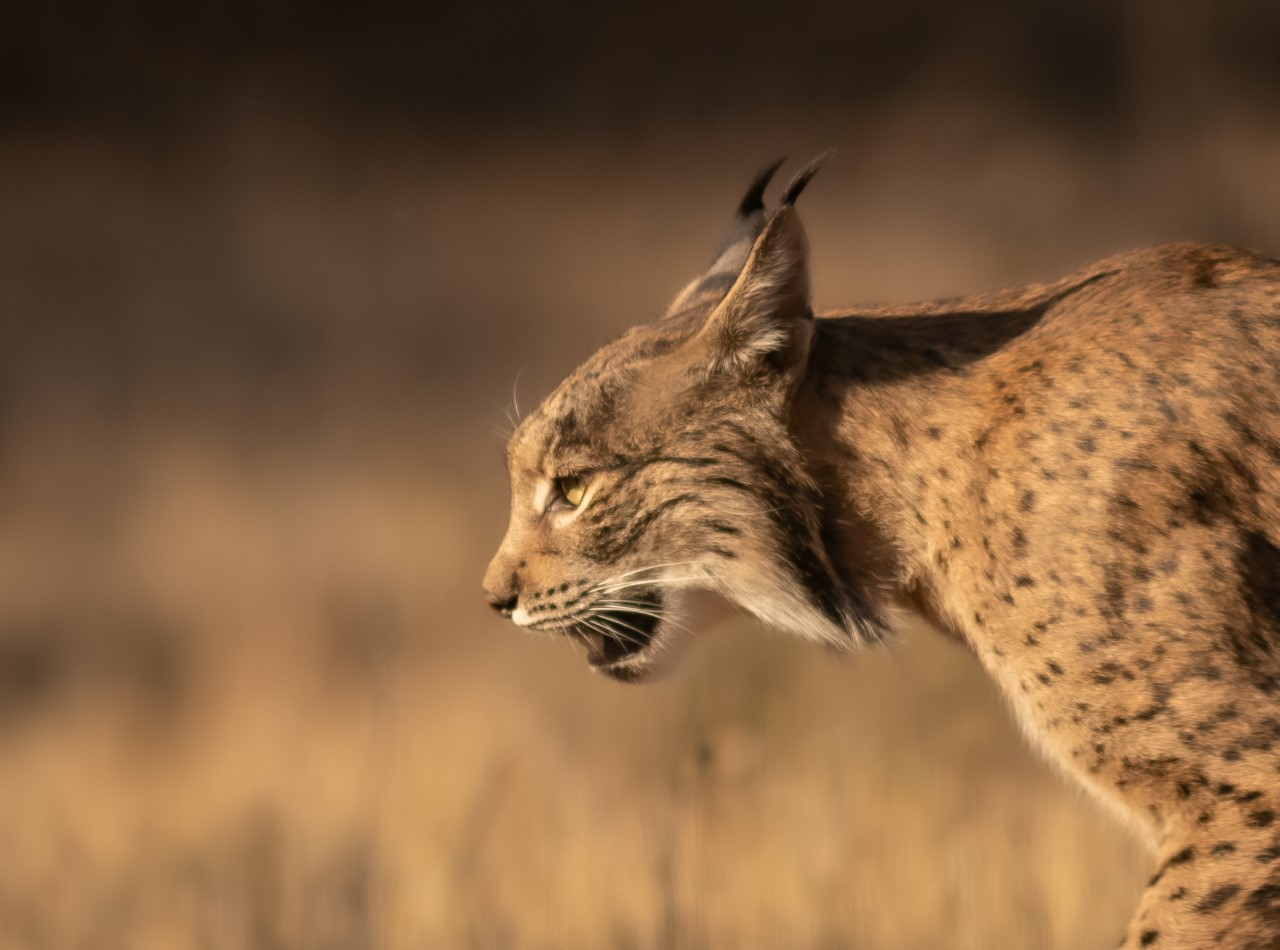
Taking full advantage of the considerable expertise of local expert guide Fernando Enrique Navarrete, who has led tours for our sister brand Limosa for over a decade, this is, therefore, the perfect opportunity to maximise on the chances of not only finding the lynx but also the other birds and mammals that make a visit to this region such a special experience.
Day 1
FLY TO MALAGA. TRANSFER TO LLERENA VISITING LAGUNA DE FUENTE DE PIEDRA
Our wildlife holiday to southern Spain begins with a flight from the UK to Malaga where we will meet up with WildWings guide Fernando Enrique Navarrete.
We will then head towards LLerena and, subject to flight times, plan to stop enroute to explore Laguna de Fuente de Piedra. This four-mile long lake is home to the second largest colony of Greater Flamingos in Europe and although these will not be breeding at the time of our visit, we should still see plenty of them.
The lagoon is also an important wintering site for an impressive selection of other species with both Marbled and White-headed Ducks amongst the waterfowl we hope to find. Wintering flocks of Common Cranes are also likely to be present along with Eurasian Stone-curlew and a good range of other species.
We plan to arrive at our comfortable and ideally located hotel in the late afternoon or early evening for the first of four nights. Night in Llerena
Days 2-4
EXPLORING SOUTHERN EXTREMADURA
We have three full days to explore the beautiful countryside of southern Extremadura which is home to a rich diversity of Mediterranean birds and mammals.
This is now considered to be one of the best places to look for Iberian Lynx and making full use of Fernando’s expert local knowledge and contacts, we are very hopeful of encountering this special cat.
We are likely to spend some of our time scanning hillsides, river valleys and rocky outcrops from key vantage points to maximise our chances of finding this special species.
Southern Extremadura is also excellent for birds including a good variety of raptors and vultures with Spanish Imperial, Golden and Bonelli’s Eagles and Cinerous and Griffon Vultures all likely. Iberian Magpie, Blue Rock Thrush, Rock and Cirl Buntings, Crested Tit, Firecrest, Short-toed Treecreeper and Hawfinch are also possible and, if the opportunity arises, we may well visit the roost of a Eurasian Eagle-Owl. We also plan to make time to explore areas of farmland and more natural habitats which are home to rare dryland species such as Great and Little Bustards, Black-bellied and Pin-tailed Sandgrouse and both Calandra and Thekla Larks.
Some species, such as Great Spotted Cuckoo, which usually winter in Africa, are also present in small numbers in January so we will be on the lookout for these too. Three further nights in Llerena
Day 5
FINAL MORNING IN LLERENA AND TRANSFER TO DOÑANA WITH BIRDING STOPS ENROUTE
Depending on what we have seen over the previous three days, we may have a final morning around Llerena before we begin our journey south towards the Doñana. We will probably make a few stops targeting any birds we have not seen.
Depending on our arrival time, we may have time to begin our exploration of one of Europe’s most impressive national parks, the Doñana National Park. Night near Pilas
Days 6-7
DOÑANA NATIONAL PARK
The Doñana National Park is rightly classified as a UNESCO World Heritage Site and we have two full days to explore the marshes, saltpans, pine forests and rice fields of what is undoubtedly one of Europe’s most iconic reserves.
The wetter areas will provide us with further chances to look for birds such as White-headed, Marbled and Ferruginous Ducks, Red-knobbed Coot, Western Swamphen and Greater Flamingos.
We can expect to encounter a good selection of familiar waders such as Avocet, Black-tailed Godwit and Little Stint but will also be on the lookout for raptors which could include Spanish Imperial Eagle and Black-winged Kite, as well as Hen Harrier, Red Kite and Merlin.
Whilst the Doñana is most famous for birds, it is also home to an estimated population of one hundred Iberian Lynx so we will have further chances to look for this species and once again will make use of Fernando’s expert local knowledge to maximise on our chances. Two further nights near Pilas
Day 8
FINAL EXPLORATION. RETURN TO MALAGA AND FLY TO UK
Depending on flight times, we are likely to have time in the morning for some final exploration before we reluctantly head for Malaga airport and our flights back to the UK.

Accommodation
Seven nights accommodation in Spain, staying in rural and small town hotels. We spend the first four nights near LLerena before heading south for a three-night stay near Pilas and not far from the Doñana National Park. All rooms have private facilities.
Meals
All main meals are included in the tour price, commencing with a light lunch on Day 1 (subject to flight times) and concluding with lunch on Day 8. Breakfasts and evening meals will generally be at the hotels but we may take some packed breakfasts on a few occasions to allow us to be out early in the morning. Lunches are likely to be a mixture of picnics and light cafe lunches.
Walking
Our walks will be mixed with some short (eg when watching for targets from various viewpoints) but there may be other occasions when we have optional longer walks which may be uphill. Wear comfortable walking shoes or lightweight boots, with sturdy corrugated soles for grip.
Weather
The weather is likely to be warmer than the UK and typically will be in the range of 8-15C when we are in Andújar with the possibility it will be a little warmer further south. Days are typically sunny but it can be chilly first thing with the occasional ground frost possible at this season.
If we go higher into the mountains in the Sierra de Andújar Natural Park, it is likely to feel cool, especially when we are scanning for lynx and other wildlife from viewpoints.
There are chances of rain so it will be important to bring some warm and weatherproof clothing.
Ground Transport
By minibus or other suitable vehicle depending on the group size.
Tour Gallery
View a gallery of images for this tour below, click on an image to view as full size with caption


Ask About This Tour
If you have any questions about this tour, please enter your details here and we will get back to you as soon as possible.
Alternatively, contact us by email or phone. We look forward to hearing from you!
- 0117 965 8333
- [email protected]
Or complete the contact form and we will endeavour to get back to you as soon as possible.
* = required field